
How Arrest Warrants Work in McIntosh County
In McIntosh County, an arrest warrant is written judicial authority telling officers to take someone into custody on probable cause. A District Court judge or magistrate reviews a complaint, an information, or a sworn affidavit before signing. The Court Clerk then files the docket event, and the sheriff's own page says the office serves warrants and process ordered by District Court. City ordinance and traffic matters take a separate route through municipal courts and city police. One more distinction matters. A summons, a bench warrant, and a city cost arrest warrant are different instruments with different causes, issuing courts, and later status events. Identify which one you are facing before deciding what to do, because the remedy depends on the instrument and the court behind it.
Probable Cause and McIntosh County Arrest Warrants
Issuance leaves a paper trail in McIntosh County: a complaint or sworn probable-cause affidavit, judicial review, a written order, a clerk filing, and service by an authorized officer. One OSCN docket phrase deserves care. "Probable-cause affidavit for arrest without warrant" records an arrest that already happened, not a pre-arrest judicial warrant. Ask the clerk what an entry means rather than relabeling it yourself.
- Identify the court and case or cause number.
- Check whether the public docket shows a complaint, affidavit, or warrant event.
- Read bond, service, return, recall, and later disposition entries.
- Call the Court Clerk or issuing court for current status.
- Ask an Oklahoma attorney about surrender, bond, walk-through, or motion procedures.
Arrest Warrants: What They Contain
A public docket record in McIntosh County can show structured fields while withholding private identifiers or sealed material. No public sample roster exists here. The official docket and process fields below describe the paperwork itself, not any person's record.
| Cause number | District Court identifier, with examples shaped like CF-YYYY-NNN. |
|---|---|
| Classification | Arrest warrant, criminal warrant, FTA process, or another court label. |
| Probable-cause basis | Complaint, information, affidavit, count, offense, or statute reference. |
| Issuing authority | Judge or magistrate and the court that authorized the process. |
| Bond and conditions | Amount, surety, appearance, PR, no-bond, forfeiture, and release conditions when public. |
| Return and status | Issued, served, returned, recalled, quashed, or later disposition. |
McIntosh County Arrest Warrant Records and OSCN
OSCN and ODCR are the public docket paths into McIntosh County District Court events, and a search by case number or party fields may reveal the warrant event plus later entries. Neither is a live statewide warrant database. For local confirmation, call the Court Clerk at 918-689-2282. Municipal citations sit outside OSCN's District Court traffic search. Federal cases sit outside the county docket entirely. Skip OSBI CHIRP as a substitute; it is a paid criminal-history search, not a current warrant service. A blank result may simply reflect a municipal, sealed, juvenile, recent, or federal record. The official Court Clerk page is the direct records source, and it lays out that office's role with the docket. That page is where a McIntosh County warrant check becomes a records request rather than a guess.
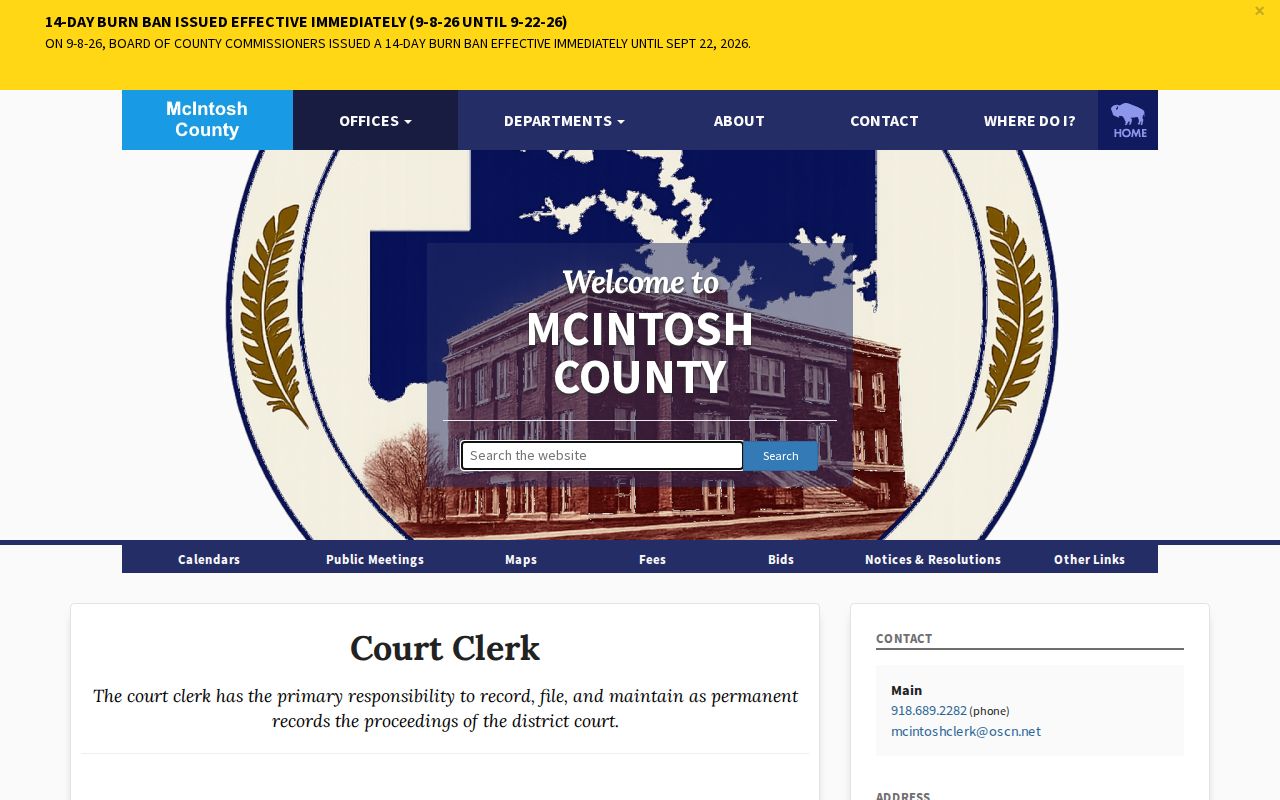
One office answers precisely. That beats any claim that a single McIntosh County search covers every court.
How Warrants Get Served in McIntosh County
The McIntosh County Sheriff's Office states that it serves warrants and process ordered by District Court and may apprehend and secure people charged with a felony or a breach of the peace. Its published office is 1425 Industrial Drive, Eufaula, with 918-689-4357 as the main line and 918-689-2526 for after-hours dispatch. The page names no warrant counter, no intake appointment, and no public list. Municipal police handle city process under the issuing court and local code. Federal service belongs to federal officers or task-force partners. So ask which agency serves the particular process. Assuming every warrant is a sheriff record leads to the wrong door in McIntosh County.
Arrest Warrants, Summonses, and Bench Warrants
These instruments can surface in one search yet answer different legal questions. A summons directs a person to appear. A bench warrant usually follows a missed appearance or a court-order problem in an existing matter. An arrest wager rests on probable cause for an alleged offense, no em dashes, so: an arrest warrant rests on probable cause for an alleged offense. A city cost arrest warrant uses municipal cost or appearance language. Whatever the paper, the issuing court controls the remedy in McIntosh County.
| Instrument | Typical purpose | McIntosh route |
|---|---|---|
| Summons or citation | Directs a person to appear or comply | District Court or issuing city |
| Bench warrant | Responds to missed appearance or court order | Court Clerk and issuing judge |
| Arrest warrant | Authorizes arrest on probable cause | District Court, sheriff, or authorized officer |
| Cost arrest warrant | Municipal cost-hearing or FTA path | Eufaula Municipal Court |
McIntosh County Arrest Terms to Read Carefully
McIntosh County dockets carry phrases that need careful reading. "Probable cause affidavit for arrest without warrant" is a docket phrase, not automatically a pre-arrest warrant. "Bond forfeiture" is a bond event. "Returned as served" is an officer return. "Recall criminal warrant" is a later court action. A sealed indictment or sealed warrant may stay out of public view until a court authorizes release.
- Probable cause
- Facts supporting a reasonable belief that an offense or relevant condition exists.
- Issuing court
- The court whose judge authorized the process.
- Serving agency
- The sheriff, city police, marshal, or other authorized officer assigned by law or court.
- Sealed
- Restricted from ordinary public access under the court's order or law.
- Recall or quash
- A later court action withdrawing or setting aside the process.
Handling an Arrest Warrant in Your Name
Never approach another person, and skip private rosters. Check your own District Court docket, call the Court Clerk, and ask the sheriff which operational questions it can answer. Before traveling anywhere in McIntosh County, ask the issuing court whether it requires counsel, a scheduled walk-through, bond, a judge appearance, identification, or a particular intake location. No universal surrender or bond-window procedure has been published. Each court sets its own steps.
Important: A general instruction to walk into the jail is unsupported here. Confirm the issuing court's current instructions and get legal advice before acting.
Once you act, get written or docket confirmation of the recall, service, release, or next setting. Even a cleared McIntosh County warrant does not necessarily close the underlying case.
Restricted McIntosh County Arrest Records
Juvenile court and related records in McIntosh County are generally confidential under 10A O.S. §1-6-102, subject to exceptions. Adult court records are generally public under 51 O.S. §24A.30 unless a statute protects them or the court enters a narrow sealing order. Active investigations and personal identifiers may be redacted too. An absent result is not proof that no process exists.
Access rule: Ask the custodian for the statutory basis for a denial or redaction, but remember that an Open Records request cannot order a court to recall a warrant.
For a specific request, name the court, the date range, the event terms, and the format. Do not ask a McIntosh County office for a name or photograph roster.
Federal Arrest Warrants Are a Separate McIntosh Question
Federal cases in McIntosh County land in the Eastern District of Oklahoma. The U.S. Marshals Eastern District page lists its Muskogee headquarters and the counties it covers, but it posts no warrant list broken out by county. PACER can pull up some federal docket material, though sealed filings stay hidden and access has limits. CourtListener and RECAP sometimes hold copies of public filings. Neither one counts as an authoritative status system. If a federal warrant seems likely, the question belongs with federal counsel, the federal court, or the U.S. Marshals district office. OSCN and the McIntosh County sheriff simply do not answer that one.
McIntosh County Federal Warrant Boundaries
For jurisdiction context, the official federal docket source and U.S. Marshals materials lay out federal coverage and who to contact. A federal docket sits apart from OSCN and from any McIntosh County sheriff list, and sealed filings may never surface in public results.
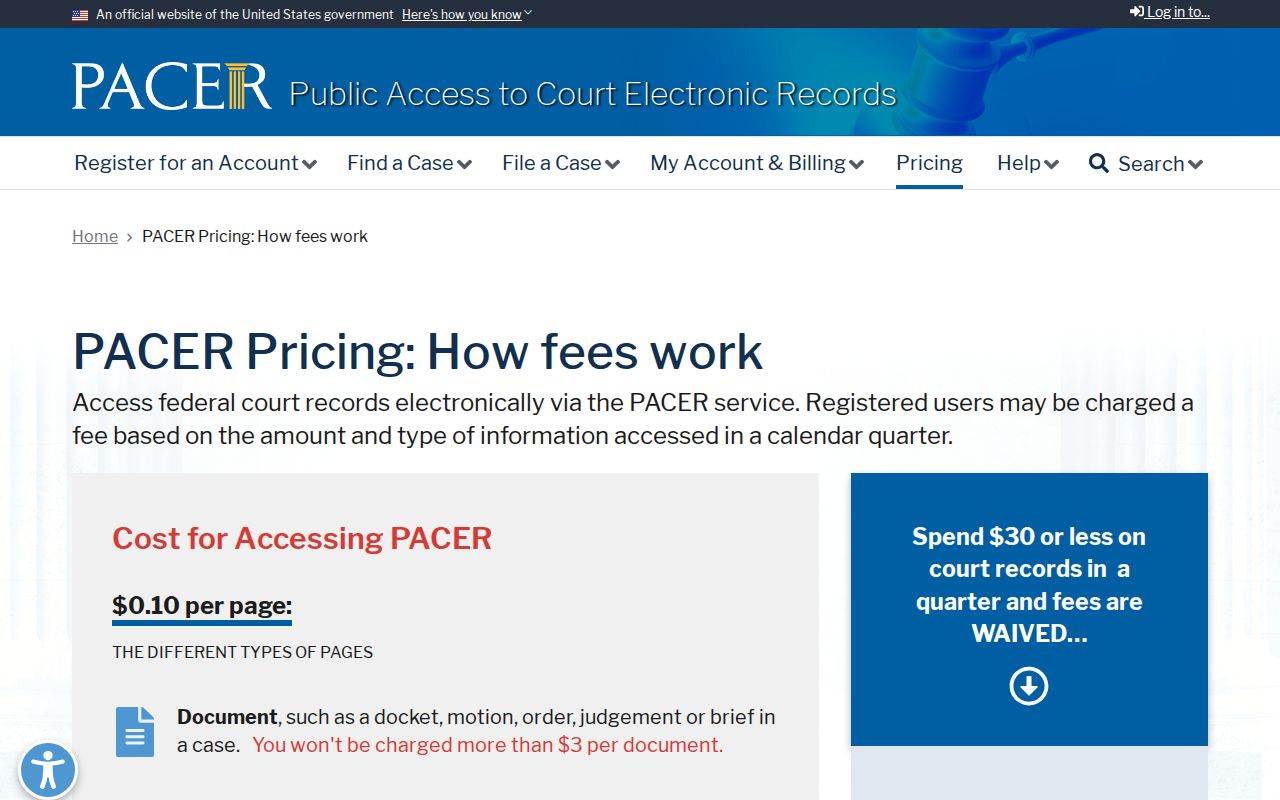
Use federal counsel or the federal court for a federal warrant question.